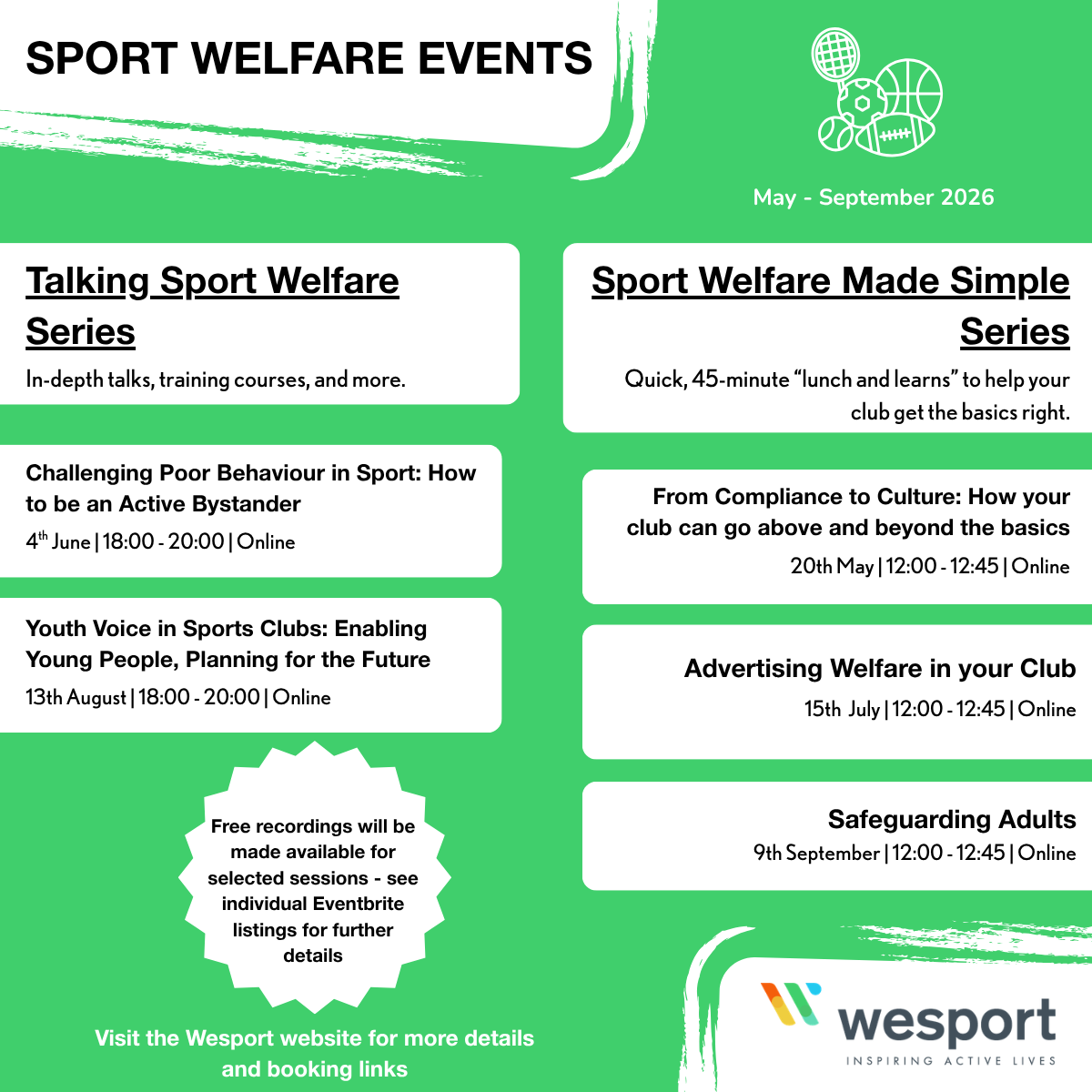
This was the first of our Sport Welfare Made Simple Series, which was an introductory “snippet” into how to move from compliance safeguarding to true safe culture in your club.
The session began by outlining some of the minimum requirements that National Governing Bodies (NGB) may have. Here at Wesport we would recommend a club has:
- A designated and trained safeguarding/welfare officer.
- A safeguarding policy in place.
But our aim is to go beyond this!
Safeguarding Policies: They need to have LEGS!
If safeguarding is about ticking a box, you won’t keep people safe. Sports clubs need to move towards a positive culture to keep everyone truly safe from harm. Culture needs to be maintained.
The club policies need to have legs. Policies don’t keep people safe, people keep people safe.
To move from compliance to culture:
- They should be easily accessible with the important and relevant information easy to find.
- Best practice would be to have a generic email address for safeguarding. This can ensure that all documents and records are in one place and someone else is able to pick up work easily if your club welfare officer is off.
- Club welfare officers can keep record of members who have read the policies by asking them to sign and date when they’ve read the document. This can help with understanding and passing along the information to the whole club.
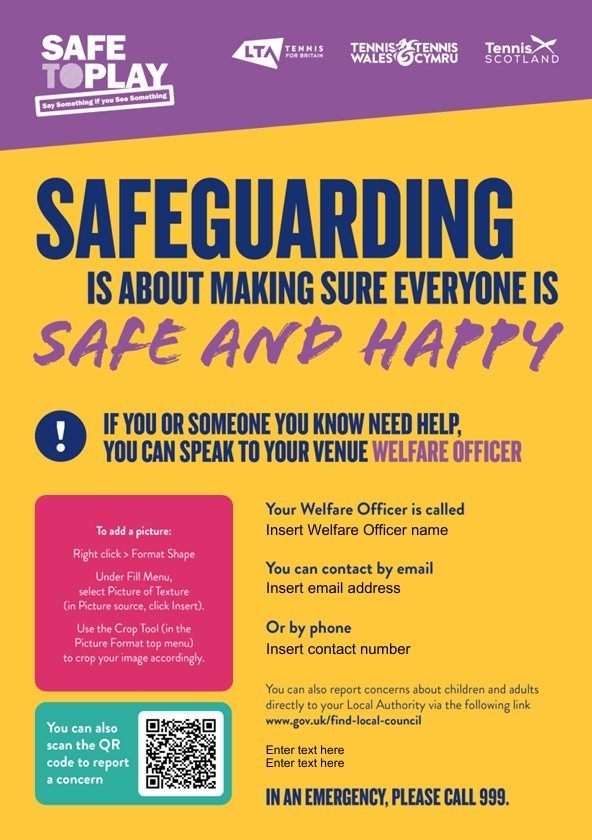
Make your Club Welfare Officer visible.
- Informing members of who they are, contact details and a bit about the role is helpful for members to know who to contact and why.
- Posters templates can be found from your national governing body’s website. Here are some examples:
- Group chats on WhatsApp or Spond are a great way to communicate with members. It’s good practice to pin the club welfare’s contact and information to the top of that chat so it can be accessed easily.
- During events and sessions, regular introductions can be useful so members can get to know who the welfare officer and build on trust.
Codes of Conduct.
Your Club’s Safeguarding Policy is a statement of intent and tells the reader what to do if anything goes wrong.
Your Code of Conduct is a list of values and rules which everyone at the club is required to abide by. It’s likely that your NGB will have their own, but we believe it’s good practice for a club to create their own. If you get your club members involved in drafting this, they should feel empowered to enforce these values. You can do this by sending out a google form to gather their ideas together.
People are more likely to follow the rules if they helped shape them.
Ways to capture youth and participant voice effectively.
It’s important that your club embeds youth voice in both “on track” and “off track” activities. If they’re confident to express everyday views to you, they will hopefully trust you to share any safeguarding concerns. You can do this by building trust, being visible and listening to their ideas and feelings.
Want to learn more?
The sports welfare officers can help you further with:
- Free events, training and talks
- Free 1-2-1 club support on issues that matter the most to you
- Access to free resources and awareness-raising tools.
More sessions to book onto: